
The women behind Antwerp's Royal Museum of Fine Arts
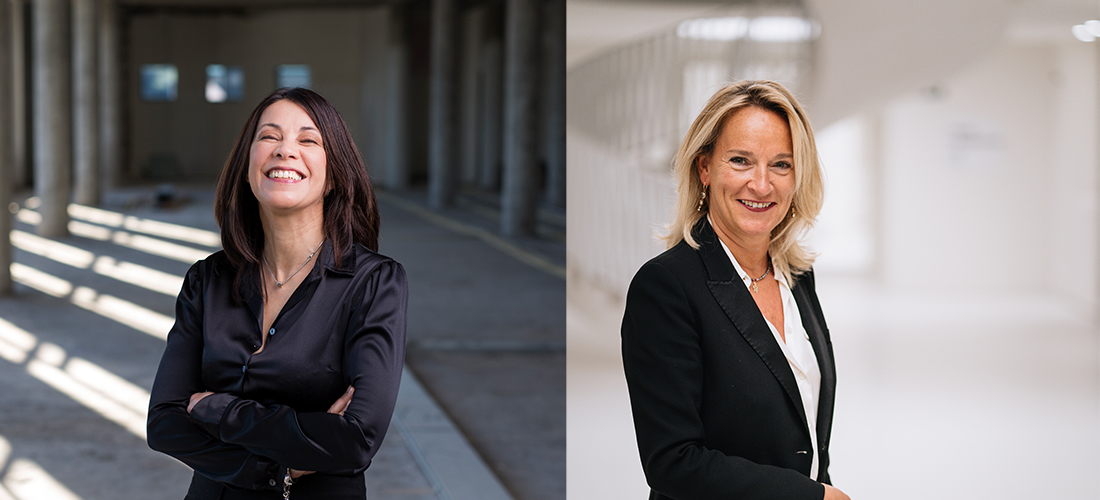
Two key women were at the helm of this far-reaching renovation: general director Carmen Willems (53) and architect Dikkie Scipio (58) of the Dutch firm KAAN Architecten. They tell us about the inspiration for the masterplan, the problems they encountered along the way and what we can expect from the long-awaited and fast-approaching opening.
Translated from Dutch. Original title: “In gesprek met de sterke vrouwen (58 en 53) achter het Koninklijk Museum voor Schone Kunsten in Antwerpen”
How does it feel to contribute to a design process that goes back so far in time?
Dikkie Scipio: I'm really very proud of the result of the renovation. We have restored the museum's strength.
Carmen Willems: A competition was held among architects to put forward a plan for the project, but I think you were the only one who argued for bringing back the original architects' concept. Now that it's complete, you might think: hardly anything has happened. But in fact an enormous amount has happened! The restoration studio was hidden away and not visible to visitors. It has now been moved, and the public can watch the restorers at work. In the past there were also few climate requirements, but we have now provided such a good climate throughout the building that even the balcony will be open to the public again. The doors at the side of the building can also now stay open. That is not only important for contact with the outside world, but they also serve as a point of orientation for visitors who want to wander around the museum. Incidentally, if you then complete all the departments, you will have walked 2.4 kilometres.
Dikkie: Did you measure that? (laughs).
Carmen: Yes, so it's good for your fitness! But it isn't necessary to visit the whole museum in one go, mind you. To see all the works and really immerse yourself in them, you would almost have to make it a seven-day affair.
How do you make sure that the different kinds of art and different periods don't clash, but enter into dialogue?
Carmen: The architecture has guided the way we are going to present the collection. The KMSKA collection comprises 8,400 objects in total, of which 650 works have been carefully selected and will be put on display. Within the permanent display we let go of chronology and style and opt for a thematic division based on two major time clusters: a collection up to 1880 and a collection of everything after 1880. James Ensor forms a pivot between the historical collection and the modern section. What's more, the KMSKA displays the largest Ensor collection in the world.
Dikkie: In the museum's central hall, visitors have the choice between the two experiences. For the area where the works from before 1880 are displayed, we chose warm, saturated colours, wooden floors, natural light from above and a symmetrical succession of museum rooms. The works after 1880 are placed in a dematerialised space, so that all the attention can go to the works. The vertical experience of space is very different there. There is a great contrast between the spaces.
What is the plan for the museum garden?
Carmen: When the museum closed, the garden was heavily used by the neighbourhood, but I think I may say that it looked a little dull. That is about to change. The garden will become the first museum room. A garden architect has been appointed, who drew inspiration from the historical design. We are now working with several garden rooms, and we have opted to incorporate more sculptures from the collection into the garden. The aim is for the garden to become a pleasant place for the neighbourhood once again, and it will always be freely accessible during the day.
What is your favourite work that will be hanging or standing in the museum – perhaps in combination with the structure built around it?
Carmen: I don't have a favourite work. We have such a rich collection, and what I find most beautiful differs from day to day. The most exceptional work is Fouquet's Madonna. It is still too little known, but it is our mission to give it worldwide fame, like the Mona Lisa in the Louvre or the Girl with a Pearl Earring in the Mauritshuis. The work was made in 1454, but its quality is still incredible.
Dikkie: When I started here I didn't know it at all, but I remember as if it were yesterday how flabbergasted I was when I first saw it hanging above the stairs. It has such incredible beauty.
Carmen: I can't wait to show the Madonna in its new setting and let it conquer the world. Like the other works, by the way, because although we may have been closed for ten years for the renovation, the works have had so much exposure. During the closure we built up an international network by lending out our masterpieces. We also restored 130 artworks. That means not only that the building is in top condition, but that the works are too. We can't wait to give that back to the public. Ultimately, we do it for the look of wonder on our visitors' faces, and I am sure it will amaze everyone. It is truly world class.
This interview appeared in the spring edition of Fifty&Me, which is in the shops now. Want to read more wonderful interviews? Pick up a copy now or subscribe.
Want the best stories from Fifty & Me delivered to your inbox? Then sign up for the newsletter.
Image (left) Dikkie Scipio (right) Carmen Willems
 Travel
 Beauty
 Beauty