
Why does winter weaken our hair?
Translated from French. Original title: “Pourquoi l’hiver fragilise les cheveux ?”
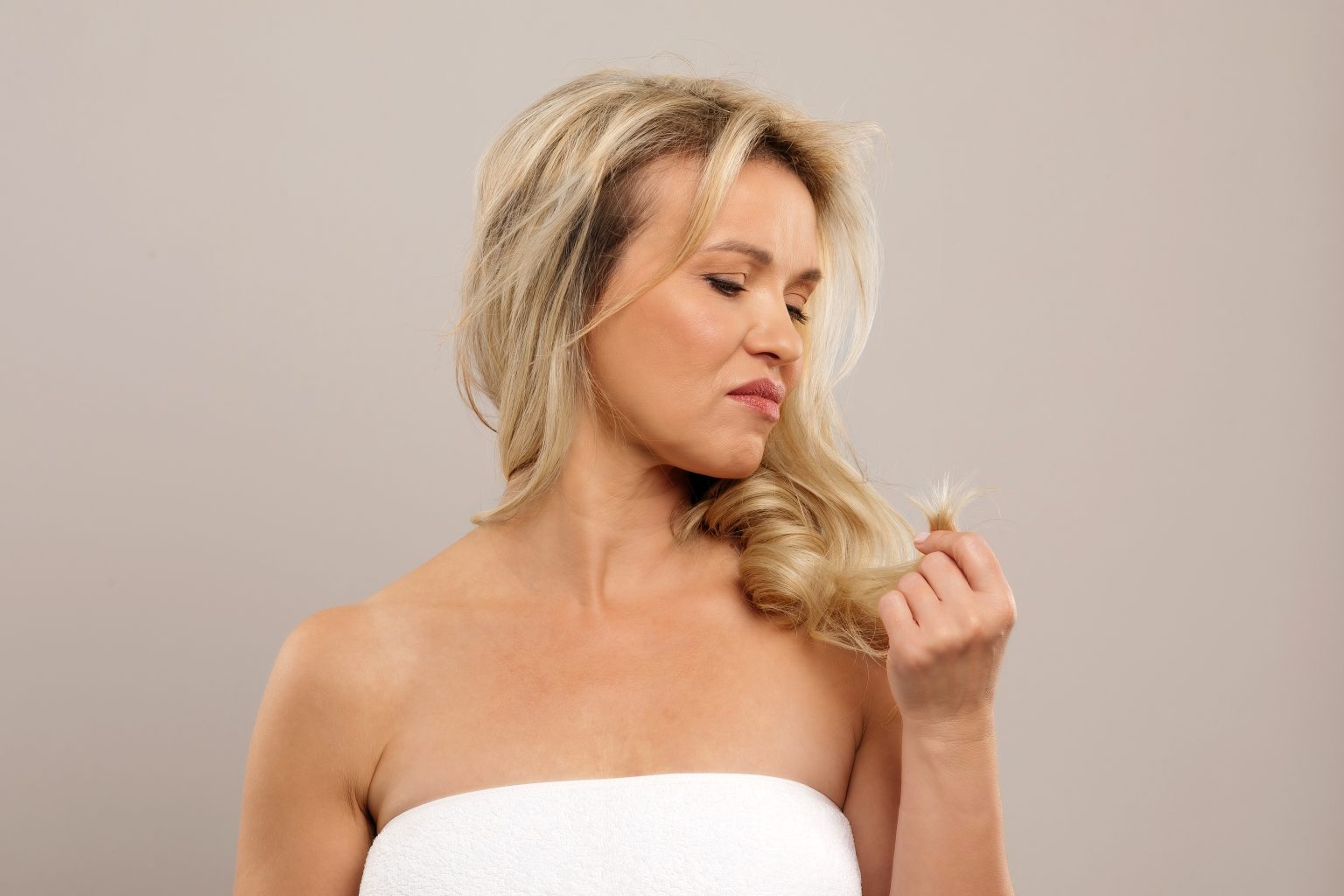
A season of slowing down for the body
Winter imposes a different rhythm on the body. Reduced exposure to natural light alters our circadian rhythms, increases the production of melatonin and affects many biological functions, including the hair cycle.
After the menopause, this effect is more pronounced. The drop in oestrogen shortens the hair's growth phase and slows the microcirculation of the scalp. The result: slower regrowth and shedding that is more noticeable, without necessarily being pathological. In short, what we take for hair loss is often simply a mismatch between shedding and renewal.
Cold and central heating: an underestimated stress
Outdoors, the cold causes vasoconstriction, which limits the supply of nutrients to the follicles. Indoors, central heating dries out the air and disrupts the scalp's hydrolipidic balance. This constant switching between the two weakens a hair fibre that is already depleted of its natural lipids with age.
The consequences are familiar: duller, more brittle hair, sometimes accompanied by itching or a feeling of discomfort. All of these are signs of environmental stress rather than an isolated hair problem.
Light, a key factor that is often overlooked
While light is widely recognised for its effect on mood, its role in hair biology remains little known. Yet certain hormones influenced by light exposure, including melatonin, play a part in the hair cycle. In winter, the hair's resting phase tends to be prolonged. Shedding then becomes more visible, particularly in women whose hair density has already decreased with age.
When should you see a doctor?
In the majority of cases, winter changes are temporary. Some signs should nevertheless raise a red flag: heavy or prolonged shedding, scalp pain, inflamed patches, or localised hair loss.
After 50, hair loss can also point to a nutritional deficiency (iron, vitamin D, protein) or a thyroid disorder, which is frequently under-diagnosed in women.
Protect without overdoing it
Faced with these vulnerabilities, it is tempting to pile on so-called "repairing" treatments. Limiting heat damage, washing less often, choosing products that are gentle on the scalp, massaging the scalp and maintaining an adequate nutritional intake: these simple measures can already help limit the damage.
 Beauty
 Beauty
 Beauty