
Perfume: Back to Basics
A hand-picked orange blossom from the Nabeul region of Tunisia, worked in four different ways to bring out facets of varying nuance, lies at the heart of Givenchy's new scent, L'Interdit Rouge Ultime. "These different extractions allow us to capture an expression of the flower that unfolds throughout the perfume, from the top notes right down to the base," explains Anne Flipo, who created the fragrance with two other master perfumers, Dominique Ropion and Fanny Bal. "The facet is enriched and expressed in several dimensions. There is a crisp, green facet with the neroli essence, a more floral one with the extract obtained using CO2, then we move towards greater sensuality with the absolute, and finally there is the most honeyed, textured facet, via the concrete. The orange blossom quartet is a constant in the L'Interdit range; it is an iconic and exclusive ingredient."
Translated from French. Original title: “Parfums : Retour à l’essentiel”
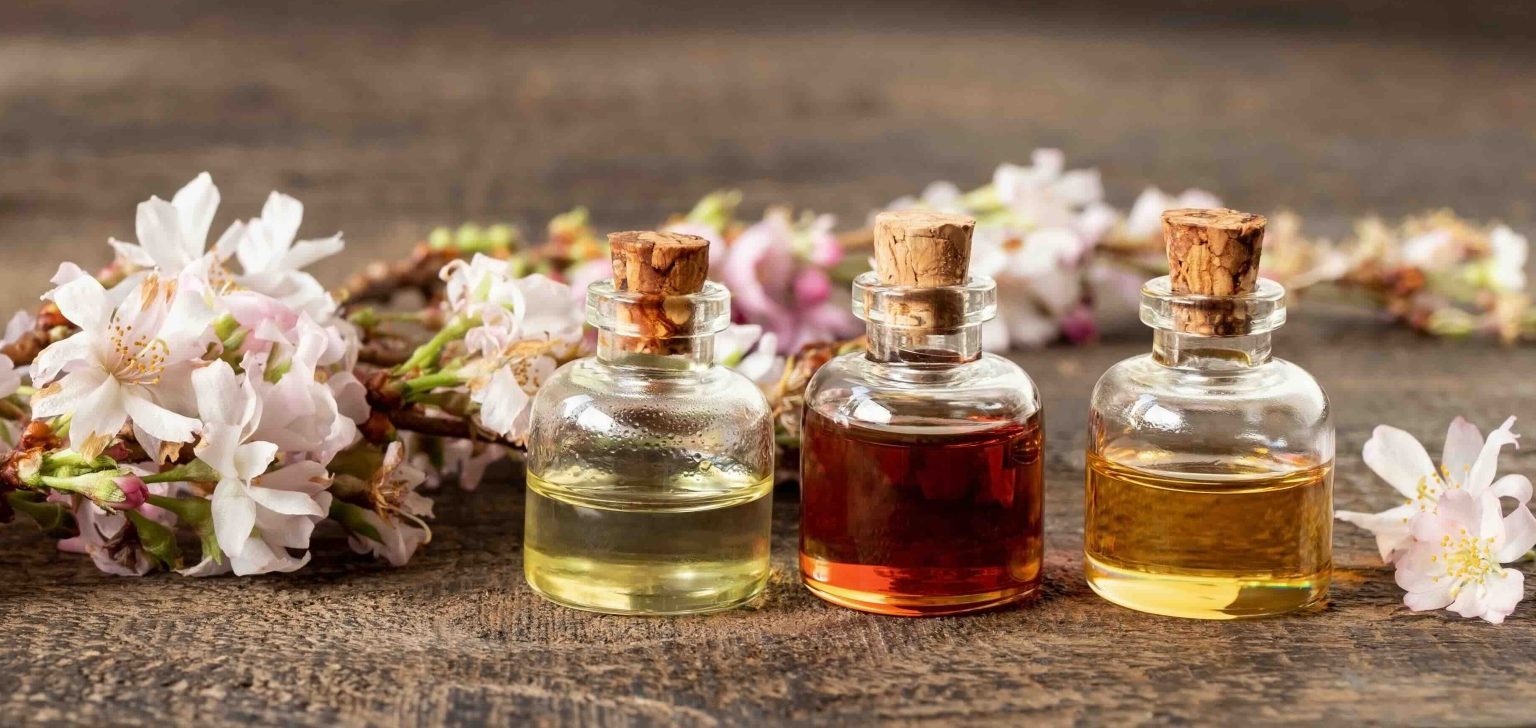
With shelves overflowing with bottles, access to exceptional raw materials is a major issue and allows brands to stand out. "We perfumers master the formulation, but we work with an entire team who take care of bringing in new natural or synthetic ingredients," says Anne Flipo. "After that, it's up to us to use them well, combine them, 'overdose' them. At IFF, we get a great deal of help from LMR, the company that belongs to the group, which offers us the best qualities, the best ingredients and new developments in extraction."
Perfumes for life
Born in Grasse into a family of perfumers going back seven generations ("my grandparents grew roses, jasmine and verbena"), Aurélien Guichard launched the niche fragrance brand Matière Première in 1998. "I grew up in an environment where, at the dinner table, people talked about perfume with passion and fervour. I was taught that raw material is sublime, and that going back to raw materials means going back to basics. There's no need to over-complicate things when you're working with quality."
The perfumer builds his scents around a hero ingredient, used in overdose and given his own personal facets. This central raw material is never chosen for marketing reasons. "There are a number of ingredients we grow ourselves, such as rose. It took 4 years before we could start producing it and have enough absolute. Once we were ready, we used it for Radical Rose. When it comes to the materials we source around the world, what is often decisive is meeting producers with a particular expertise. For example, the sandalwood in Santal Austral comes from Australia, via a company, Dutjahn, which is owned by local Aboriginal people. I had heard about this company, which had won many awards for its ethical development, and for the fact that everything was done locally. For the saffron, I had asked various producers to send me what they make. A vial of saffron arrived on my desk from Greece. And it gave me an idea for Crystal Saffron. I ran trials almost straight away, and the next day, the perfume was finished. Sometimes it takes me 6 months to a year, starting from the ingredient, to arrive at the finished scent, and other times, as here, it takes just 2 or 3 days."
Sustainable and fair ingredients
At the heart of Matière Première's new Vanilla Powder is a vanilla absolute from Madagascar, grown as part of a Fair for Life programme that supports the local population (building schools, solar panels and so on). Far from a gourmand note, the Malagasy vanilla has here been set against a wood from Ecuador, palo santo. "As a perfumer, I know of vanillas that have already been created by the big houses, often with a dark treatment, close to the pod, almost sweet. To make this vanilla more sophisticated, I wanted to take it somewhere bright, white and unsweet while still being addictive. The work lay in contrasting it with another ingredient, palo santo, a rather fresh wood. Shamans traditionally burned it, using the smoke for mystical purposes. That vertical freshness is almost the opposite of vanilla, which is all roundness."
For the new fragrance in the L'Interdit family, Anne Flipo and her colleagues opted for an upcycled raw material: cocoa pods that used to be thrown away. "We are giving value to waste that had not been used until now," she explains. "It is the husk of the cocoa bean that is reworked, and it gives an extraordinary raw material. A powerful, deep, gourmand note, natural like a 90% cocoa that is neither sticky nor sweet. It gives the perfume a delicious and captivating side." In a world facing global warming, ingredients must be sustainable. "By 2030, our palette will be completely renewed. Throughout history, some ingredients have arrived and others have disappeared. We have had to make do, and it is very interesting, even from a creative point of view. We must work towards transparency in supply chains and sourcing. At IFF, we have a platform for vetiver in Haiti, for patchouli in Indonesia, for jasmine in India, for sandalwood in New Caledonia, for narcissus in Auvergne, for orange blossom in Tunisia... This allows us to secure our supply and to keep a very close hold on every ingredient by working on it, and therefore to achieve exceptional qualities. I am convinced that consumers can sense it."
Our perfume selection
- Vanilla Powder by Matière Première. A generous but unsweet Malagasy vanilla, paired with a fresh wood, palo santo. €205 for 100 ml of eau de parfum (at Beauty by Kroonen - shopbeautybykroonen.com).
- L'Interdit Rouge Ultime by Givenchy. The alchemy of a quartet of orange blossoms, recycled cocoa pods and a deep woody accord of patchouli and vetiver, textured with facets of tobacco. €129,50 for 80 ml of eau de parfum.
- N°5 L'Huile Corps by Chanel. The aldehydic floral bouquet of N°5 is released directly onto the skin in a moisturising oil that enhances the complexion. €115 for 250 ml.
- Kagari for Her by Annayake. A gourmand floriental with notes of ginger, pear sorbet, orange blossom, tonka bean, vanilla and patchouli. €92 for 100 ml (at April - april-beauty.be).
- All of Me by Narciso Rodriguez. A reinvented floral with Centifolia roses combined with geranium, meeting an accord of creamy white musks. €158 for 90 ml of eau de parfum.
- Sì Eau de Parfum Intense by Giorgio Armani. A blackcurrant nectar that blends with a velvety floral heart and a sensual bouquet of vanilla. €95 for 30 ml.
- Carmina by Creed. Notes of vintage lipstick, with May rose, crisp black cherry and saffron, set against a backdrop of musk and amber, for this scent from the Franco-British brand founded in 1760. €250 for 75 ml of eau de parfum (at Senteurs d'Ailleurs - senteursdailleurs.com).
- L'Or de J'Adore by Dior. Dior's Perfume Creative Director Francis Kurkdjian has pared back the profusion of this classic's floral bouquet (jasmine, rose, lily of the valley, violet) to create a more refined version that is still silky and suave. €176 for 50 ml.
- C'est Paris ! La Nuit by Carven. Sparkling mandarin and rhubarb give way to a floral heart, then to vanilla and a woody base. €86,50 for 50 ml of eau de parfum (at April - april-beauty.be).
- Zafferano by Acqua di Parma. A rare and mystical spice, saffron is set against a citrus note for a sensation of radiant warmth. €222 for 100 ml (acquadiparma.com).
Cover photo: Istock.
 Beauty
 Beauty
 Beauty