
Good habits for healthy hair
Translated from French. Original title: “Des bonnes habitudes pour des cheveux sains”
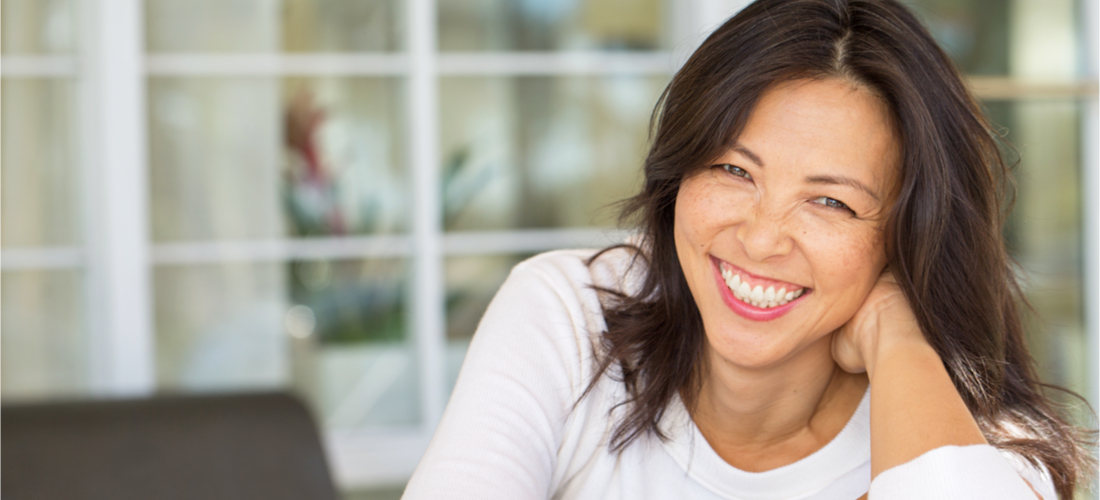
How can you keep your hair healthy?
Just like your skin, your hair is not spared by the ageing process. There are no wrinkles or sagging to speak of in this case, but hair visibly loses its thickness and volume. There is a reason for this: as we age, the cells in our hair produce less keratin, the main protein in hair. Less keratin means less volume, but also less beauty. Your hair becomes finer, duller and less resistant to external aggressors.
Around the menopause, when a woman's cycle becomes irregular and fewer hormones are secreted, hair loss speeds up. Specialists estimate that 25% of women experience greater hair loss during this period of their lives, with the hair on the crown of the head in particular becoming thinner. But don't worry: with the right care and good habits, it is possible to keep your hair healthy. Your hair will stay strong for many years to come.
What is bad for your hair?
Certain external factors accelerate the ageing of our hair, so do keep an eye on a few things. A handful of simple steps can make a visible difference to your hair.
Sun and heat: UV rays and heat make hair more fragile and drier. Hair becomes stiff and brittle and loses its shine. Protect your hair every day (and not only on a seaside holiday) with sprays containing UV filters. Some shampoos offer very good protection against hair ageing. They are enriched with antioxidants, vitamins and minerals, which protect against free radicals. They also contain nourishing ingredients and stop your hair from drying out. If your hair is very dry, use an oil that penetrates to the roots, nourishes the hair and makes it stronger. Apply the oil before shampooing, either along the full length or just on the ends, depending on your hair type, and leave it on for fifteen minutes, or overnight if your hair is very dry.
Pollution: harmful to health in general, it also damages hair, making it dull and brittle. According to some scientists, it is also a factor that considerably speeds up hair loss. Use regular clarifying shampoos to remove particularly stubborn residue left by pollution and by the silicones in some hair products. If you swim regularly, wear a swimming cap, but also make sure you wet your hair with pure mineral water (the best kind) before getting in the pool. Your hair then soaks up chlorine-free water, which limits how much of this harmful substance can penetrate afterwards.
Perms, curls, colouring and all other chemical treatments: although formulas have been improved to minimise negative side effects, every chemical treatment damages hair, dries it out and weakens it. Repeated brushing only makes the problem worse. So opt for a natural haircut, without using a hot-air brush, tongs or a hairdryer. It will also save you time and energy!
Tobacco: a cigarette contains more than 2,500 chemical substances, including cadmium, pesticides and arsenic. Because hair stores everything we absorb into our bodies, nicotine can even be found in the hair of women who smoke! Tobacco also reduces blood circulation in the scalp and can therefore lead to a shortage of amino acids, vitamins and trace elements, which slows hair growth. Smoking is therefore thought to have a significant impact on hair loss and to cause premature greying as well. Yet another reason to give up, in case you needed one…
What is good for your hair?
Remember that hair is an extremely reliable barometer of your general state of health. The menopause sometimes brings significant hair loss. This is due to an imbalance between oestrogens and androgens (see also unwanted hair growth). If there are more androgens, hair falls out and loses its vitality. Sometimes a few simple solutions are enough to put this right:
Eat a balanced diet and don't hesitate to take extra vitamin supplements and mineral salts. It is also worth knowing that excess weight can increase hair loss, as adipocytes (fat cells) can encourage the storage of androgens. If necessary, take a course of food supplements to slow hair loss, stimulate growth and restore balance to the scalp.
Massage your scalp regularly. You can of course call on a specialist (more and more hair salons offer scalp massages while shampooing), but a daily scalp massage of around ten minutes is also 100% effective. You can use a product to stimulate the scalp and encourage hair growth, but working with dry fingertips (never your nails!) is also very good. Use gentle movements all over your head, moving the scalp back and forth to release tension and boost the supply of oxygen to the hair from the roots.
Check your scalp, because that is where hair growth and anchoring take place. If your scalp is in poor condition and out of balance because of repeated harsh influences (pollution, stress, chemical treatments and so on), you can't expect your hair to look good. As soon as you notice itching, oily or dry flakes, or a red, irritated scalp, think about a treatment that acts on our scalp "flora" and restores balance. Don't give up: often, this treatment has to be applied for several weeks before it is really effective.
Hair extensions: why not?
More and more hairdressers are recommending hair extensions. Why not? The technique has evolved, and today extensions can already be used to restore volume, in a completely natural way, to a hairstyle that is going limp. It works like this: the hairdresser attaches natural strands of hair with keratin bonds that do not damage the hair at all and that, if correctly placed, can bring back volume even to the most fragile hair. If you look after your hair regularly (for a lovely, lasting result, it is recommended to visit the hairdresser roughly every 6 weeks), you're good for four to six months, depending on the number of extensions and the care you take at home (shampooing from the front towards the back and never the other way round, careful brushing with a special brush so as not to damage the attachment points, and so on). It goes without saying that the price is not cheap, but the result is worth it!
All that is left is to put this into practice for healthy, shiny, strong hair!
 Beauty
 Beauty
 Beauty