
Does your skin age faster in winter?
Freezing cold + overzealous heating? In winter, our skin faces a double ordeal. And after 50, it no longer has quite the same weapons to defend itself. Dryness, loss of firmness, a dull complexion: when the menopause enters the equation, our skin needs some very special attention. Here's what's going on, and the right habits to bring back a radiant complexion, even when the thermometer plummets.
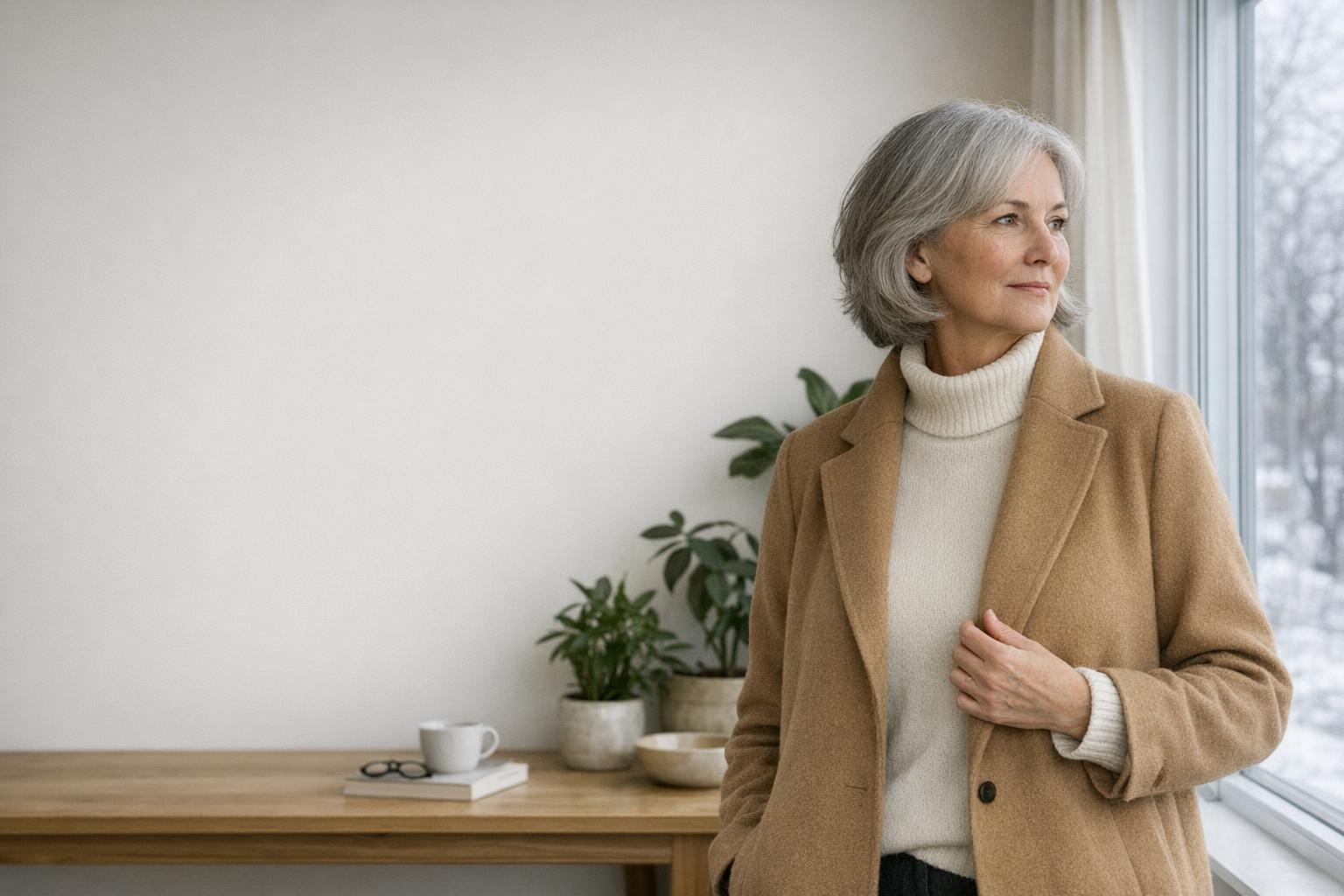
We all knew about the hot flushes, the restless nights and the mood swings. But did you know that the menopause also profoundly changes the way our skin works? The culprit is falling oestrogen levels. These precious hormones play a part in collagen production, keeping skin hydrated and supple. Studies suggest that skin can lose up to 30% of its collagen in the first five years after the menopause. The result? It becomes thinner, gradually loses its firmness and shows signs of tiredness more readily. On top of that, the skin produces fewer lipids, which are essential for maintaining its protective barrier. And as if our hormones weren't doing enough already, along comes winter to add its two penn'orth!
Cold outside, warm inside: a drying cocktail
Between sub-zero temperatures, gusty winds and radiators turned up full blast, our skin no longer knows which way to turn. Cold and dry air encourage dehydration, while sudden changes in temperature can make redness and that tight feeling worse. The real problem? A weakened skin barrier. This natural shield, made up largely of lipids, normally limits water loss and protects the skin from external aggressors. When it isn't working as well, water escapes more easily. Skin becomes uncomfortable, rough and sometimes even itchy. After 50, this vulnerability can be heightened by hormonal changes. A double whammy we could happily do without!
Why does our complexion lose its glow?
Does your face look duller when you wake up, even after a good night's sleep? It's not necessarily your imagination. As we age, cell renewal gradually slows down. Dead cells can build up on the surface of the skin, giving the complexion that muddy look that seems to absorb light rather than reflect it. Add to that dehydrated skin, a less even texture and days when natural light is in short supply, and that famous glow can sometimes go missing altogether. But be careful not to confuse radiance with heavy exfoliation! On mature skin that's already sensitised by the cold, piling on harsh scrubs is more likely to make the problem worse. Gentleness remains our best ally.
What if our scalp has the winter blues too?
We often forget it, but the scalp is skin in its own right. It too can suffer from dryness, itching and discomfort during the winter. Dandruff, for its part, can come and go depending on various factors, including imbalances in the scalp. During the menopause, some women also notice their hair becoming less thick, partly due to hormonal changes. A reminder that looking after your hair also means looking after the skin it grows from. The key? Work out what your scalp really needs rather than piling on products. If you have persistent dandruff, severe itching or unusual hair loss, seeing a dermatologist will help you find the right treatment.
Operation soft skin
Good news: there's no need to turn your bathroom into a cosmetics lab to get through winter looking your best. A few targeted habits can already make all the difference. Start by choosing a gentle cleanser rather than a stripping soap, and cut back on scalding hot showers, which make dry skin worse. When it comes to skincare, look for formulas that combine humectants, such as glycerin or hyaluronic acid, with lipid-replenishing ingredients, particularly ceramides, to help skin hold on to water and strengthen its protective barrier.
Hands, which are especially exposed to the cold and to frequent washing, also deserve a repairing cream applied regularly. And don't forget sun protection: even in winter, UVA rays still pass through the clouds and contribute to skin ageing.
Finally, rather than trying to erase the years at all costs, learn to listen to what your skin needs. Because at 50, 60 and beyond, the real goal isn't to look younger but to feel comfortable in your own skin. Remember that radiance knows no age… and no season!
 Beauty
 Beauty
 Beauty